Waymark
A local-first till and decision support for small stores
- Role
- Founder, solo build
- Team
- Solo
- Timeline
- 2026 – present
- Status
- In progress, ENSIA V2V incubator
- Stack
- C#, .NET, Avalonia, ASP.NET Core, SQLite, React, TypeScript
- Links
- Private repo. Ask for a demo
Problem
Small and medium stores lose money in two quiet ways: products expire on the shelf, and the stock on record stops matching the stock in the shop. I interviewed four retailers, and they ranked expiry losses and inaccurate stock among their biggest problems.
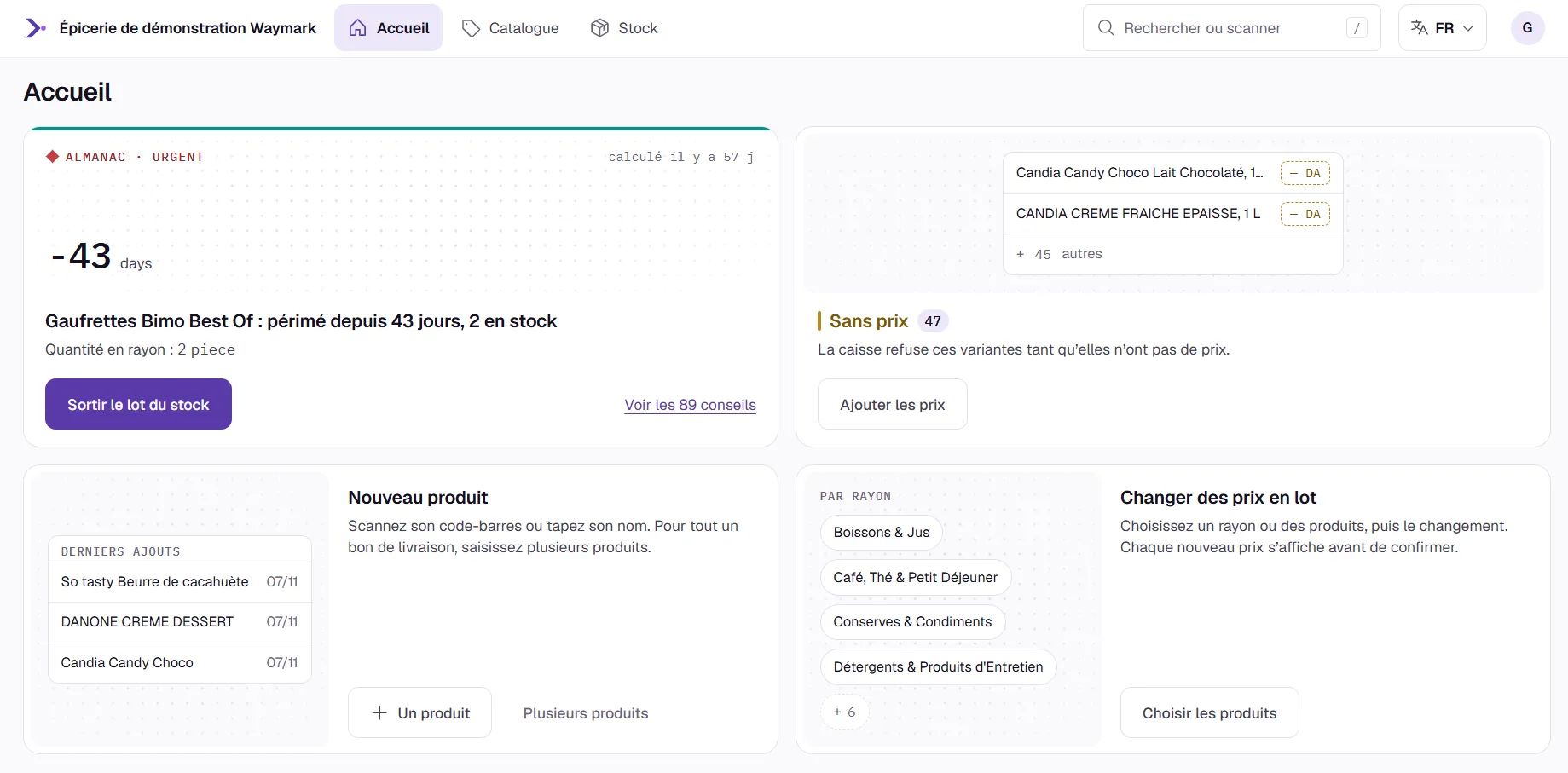
Waymark is a store management system for Algerian retailers built around those two problems. It is a till and a back office, plus Almanac, an engine that recommends what to order, mark down or watch, and shows why.
Context and constraints
- The internet is not reliable enough to sell on. The till and the back office have to keep working without it, so Waymark is local-first: the store’s own machine holds the data.
- A new store has no sales history. Advice that needs months of data before it says anything arrives too late.
- The owner has to trust the advice. A retailer will not act on a recommendation they cannot check, so the rule in the codebase is that code which cannot be explained does not ship.
- The till is used at speed. Checkout works from the keyboard alone, and the interface is in Arabic and French.
My role
I am the founder and Waymark is a solo build. I ran the retailer interviews, designed the architecture, and wrote the till, the server, the Admin app and the first Almanac evaluator.
Approach
One server owns the data. The till never opens the store database. It talks to StoreServer over HTTP even when both run on the same machine, and the Admin app does the same from any browser on the shop’s network. Every rule lives in one place, and architecture tests fail the build if a project reaches across a layer it should not.
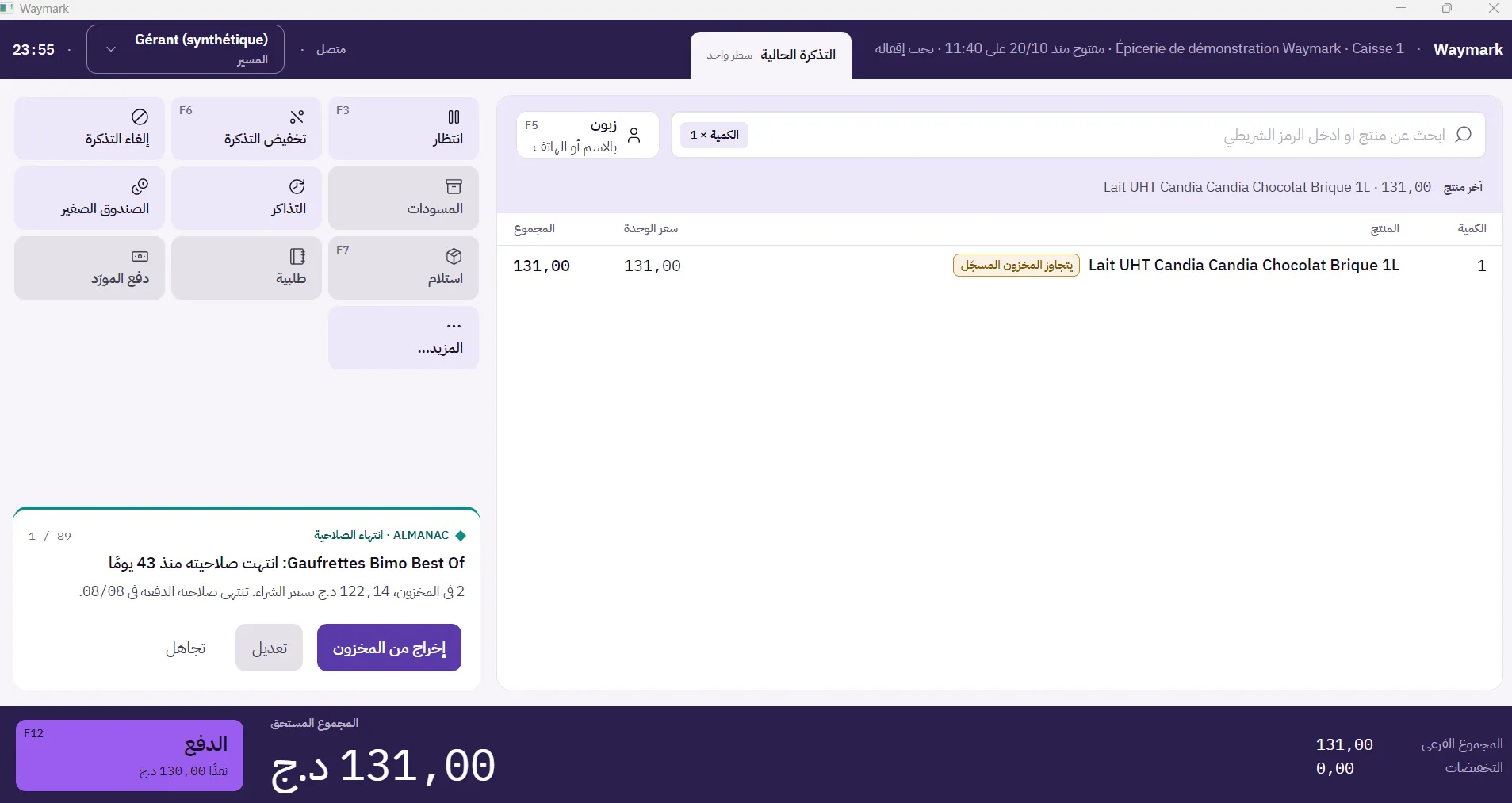
Expiry alerts that work from day one. Stock is tracked per batch and sold first in, first out, so Waymark always knows which units expire first. That needs no sales history, so the alert works on the first day.
- Batch received A delivery enters stock as its own batch, with its date.
- Stock by batch Sales draw from batches first in, first out.
- Alert before expiry The evaluator flags a batch near or past its date.
- Suggested action The card offers a next step, not only a warning.
Interpretable methods over black-box ML. Almanac uses operations research and statistics, so every recommendation can be explained to the retailer in terms of their own stock. The same card appears in the back office and on the till, where the cashier can act on it between two customers.
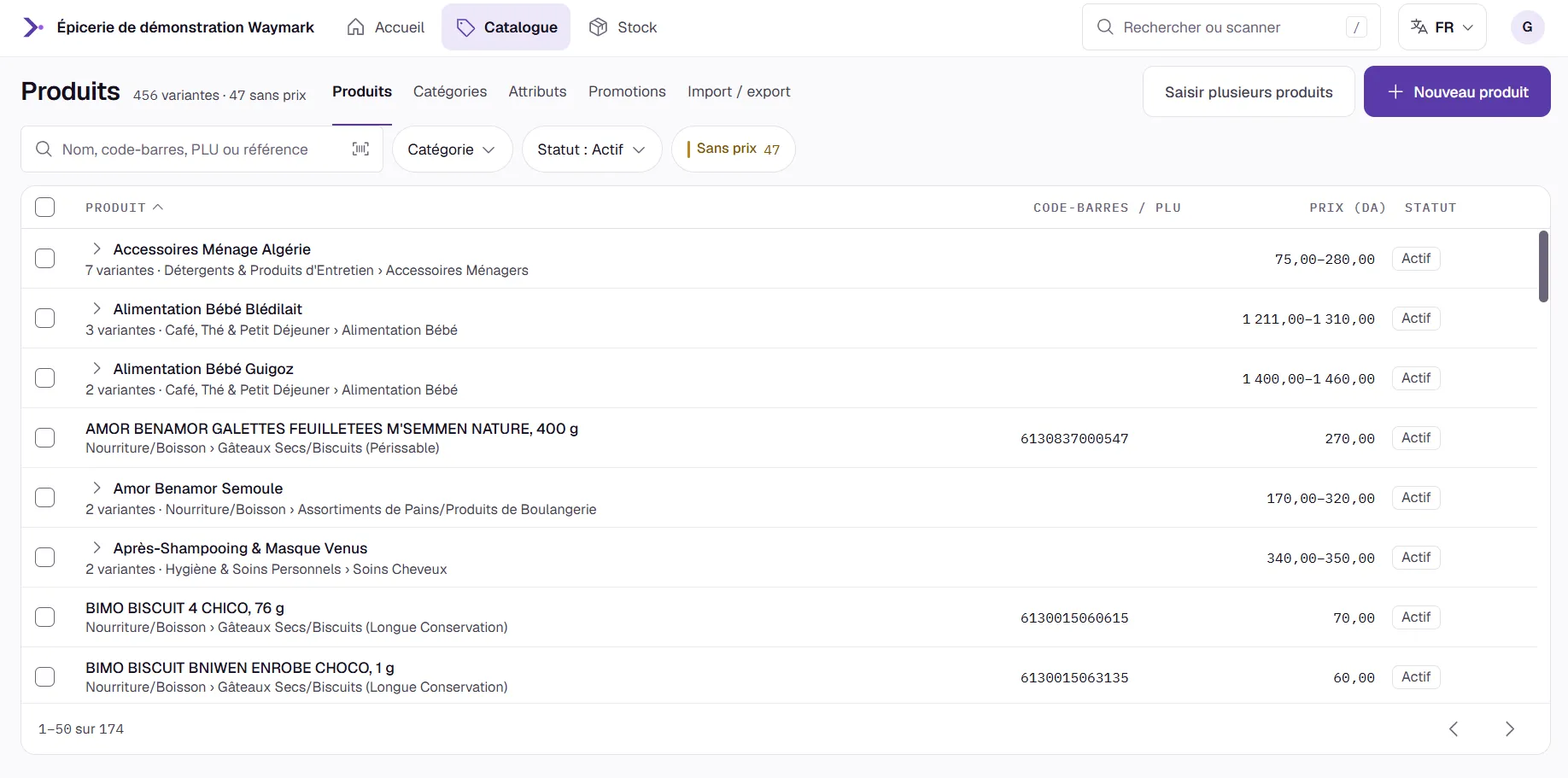
A synthetic store for every demo and test. A generator builds a complete grocery store from a config and a seed: the same inputs always give the same store. Demos and tests never touch a real shop’s data, and the engine can be checked against demand that is known in advance.
Results
- The offline-first till has shipped, with keyboard-only checkout and an Arabic interface.
- The Admin app is about 50% complete.
- Expiry alerts run in the store today and appear on both the till and Admin.
- Waymark is supported by the ENSIA V2V incubator, and the first pilot was scheduled for November 2026.
What I’d do differently
Next steps
- Finish the Admin app.
- Run the first pilot in a real store.
- Extend Almanac from expiry to its other two jobs: what to order and what to mark down.